
Go Behind the Canvas
Behind the Canvas Conversations with Clark
“Every painting begins with a spark of inspiration, but what you see on the canvas is only part of the story. Behind the Canvas is where I share the ideas, techniques, hidden details, and personal experiences that bring my glowing Southwest landscapes to life. Whether you’re curious about fluorescent acrylics, the inspiration behind my Cathedral Rock series, or what it’s like to create a painting from start to finish, you’ll find those stories here. These are the conversations we’d have if you stopped by my studio for a visit. I hope they help you see not only my artwork, but also the passion, patience, and imagination that bring each painting to life.”
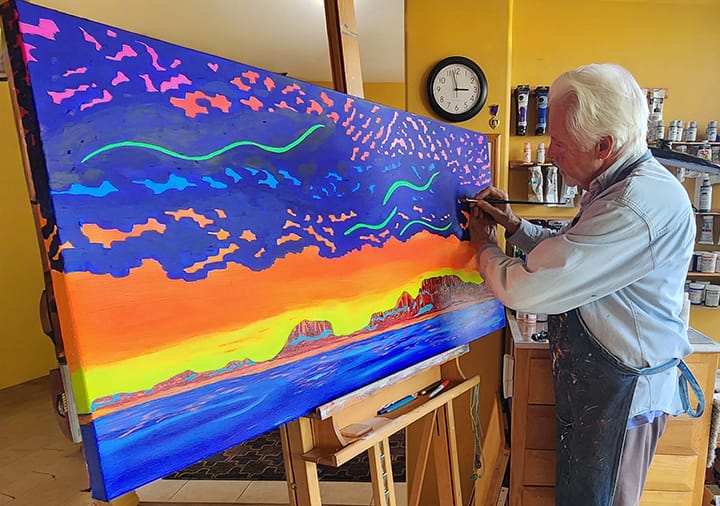
🖌 My Creative Process
A Day in My Studio
People often ask me what it’s like to spend a day in my studio.
The answer usually surprises them.
Painting is only part of what I do.
Every painting begins with a decision:
What am I going to paint next?
Sometimes the idea comes from a recent hike through Sedona. Sometimes it’s inspired by an old photograph, and other times it’s a memory that’s been waiting years to find its way onto a canvas.
Once I’ve chosen the subject, I begin with a sketch, laying out the composition and deciding how I want to lead your eye through the painting. From there, I start blocking in the major colors and values.
That’s when the real journey begins.
Although I have a vision in mind, I rarely know exactly where the painting will end up. As the layers build, know as the under painting ,the painting begins to evolve. A sky becomes more dramatic. A reflection grows stronger. A hidden heart quietly finds its way into the landscape. Sometimes a whimsical animal appears that wasn’t part of the original plan.
Every painting tells me a little more about what it wants to become.
My studio faces north and features a large bay window that fills the room with beautiful, consistent natural light. It’s one of my favorite parts of the studio. The changing seasons outside the window are always inspiring, while the soft northern light allows me to judge colors accurately throughout the day.
One of the most important pieces of equipment in my studio isn’t my easel or my paintbrushes.
It’s my Sedona Art Studios director’s chair.
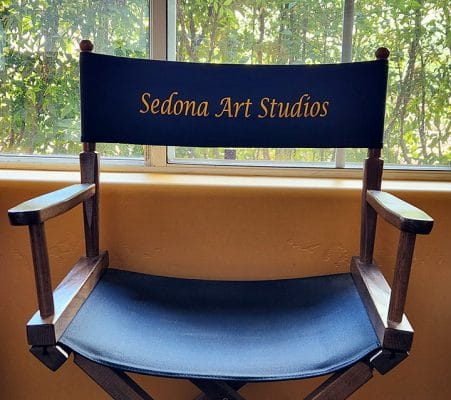
More artistic decisions are made here than with a brush in my hand.
More artistic decisions are made here than with a brush in my hand.[/caption]
That chair sits across the room from my easel, and I spend a surprising amount of time sitting in it. From there, I study the painting as a whole, asking myself what’s working, what isn’t, and what needs to happen next.
I’ve learned that some of my best artistic decisions aren’t made while I’m painting.
They’re made while quietly sitting in that chair.
Painting is only half the job.
Seeing is the other half.
People are sometimes surprised when I tell them that I’m usually listening to music or an audiobook while I paint. Once the composition has been established and I’m building layers, refining colors, or adding details, much of the process becomes instinctive. I don’t have to think about every brushstroke, so I can enjoy a good story or my favorite music while the painting continues to grow.
Of course, there are exceptions.
When I’m solving a difficult problem or making an important decision about the composition, everything gets turned off. Those moments deserve my complete attention.
I’ve also learned that creativity can’t be rushed.
Some days I paint for hours. Other days I spend more time sitting in my chair, studying the painting than I do with a brush in my hand. I’ve discovered that slowing down often leads to the biggest breakthroughs.
Every once in a while, I’ll even leave a painting on the easel overnight—or for much longer—so I can look at it with fresh eyes the next morning. Time has a way of revealing things I simply can’t see when I’m too close to the work.
By the time I sign my name, the painting has become much more than an image.
It’s the result of hundreds of decisions, countless brushstrokes, quiet moments of reflection, and a creative journey that often surprises even me.
That’s what a day in my studio is really about.
Not just making paintings.
But discovering them.
If you’re ever in Sedona, I’d love to welcome you into my studio. Seeing a painting on the easel, works in progress, and the creative space where it all happens is an experience that’s difficult to capture in photographs. You’re always welcome to schedule a complimentary studio tour.
My Painting Process
People often ask me, “How do you create one of your paintings?”
The answer begins long before I ever pick up a paintbrush.
Every painting starts with a decision.
What am I going to paint next?
Sometimes the inspiration comes from a hike through Sedona. Other times it’s an old photograph, a special place I’ve visited, or simply a memory that has stayed with me for years. Once I know the subject, I begin sketching the composition onto the canvas.
The sketch is my roadmap.
It establishes the basic design and helps me decide how I want your eye to travel through the painting. Once I’m happy with the composition, I begin blocking in the major colors and values. Artists often call this the underpainting, and it’s where the foundation of the painting is established.
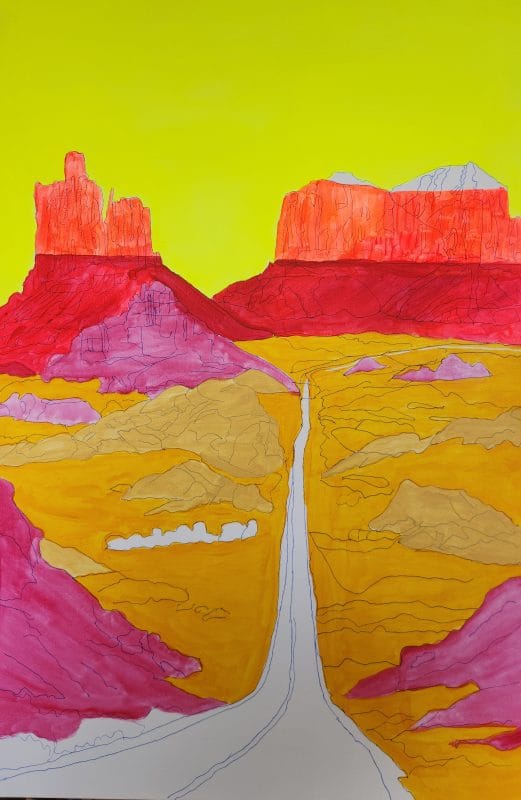
Every painting begins with an underpainting—the foundation of color, composition, and values that guides everything that follows.
Every painting begins with an underpainting—the foundation of color, composition, and values that guides everything that follows.[/caption]
From that point on, the painting begins to evolve.
Although I always have a vision in mind, I rarely know exactly where the finished painting will end up. As each layer is added, new ideas begin to appear. A sky becomes more dramatic. Reflections become more inviting. A hidden heart quietly finds its place. Sometimes a hummingbird, coyote, or roadrunner appears that wasn’t part of my original plan.
The painting begins telling me what it needs.
One of the most important tools in my studio isn’t a brush.
It’s my artist’s chair.
I’ll often sit across the room and simply observe the painting. Looking at it from a distance allows me to see things I might miss while standing only a few inches away. Some of my best decisions are made while quietly sitting in that chair.
Painting is only half the process.
Seeing is the other half.
Once the composition has been established and I’m building layers of color, I often listen to music or an audiobook while I paint. Much of the brushwork becomes instinctive, allowing me to enjoy a good story while the painting continues to grow.
Of course, when I’m solving a difficult problem or making an important compositional decision, everything gets turned off. Those moments deserve my complete attention.
I’ve learned never to rush a painting.
Some take weeks.
Others take months.
A few even spend time hanging in my home before I decide they’re truly finished. Time has a wonderful way of revealing what a painting still needs—or reminding me that it needs nothing at all.
Every painting teaches me something new.
That’s one of the reasons I still love walking into my studio every morning.
I never know exactly where the journey will lead, but I know it always begins with a blank canvas…and a little curiosity.
Knowing When a Painting Is Finished
One of the questions I hear most often is, “How do you know when a painting is finished?”
The honest answer is…
The painting tells me.
That may sound strange, but every painting has its own journey. I may begin with a clear vision, but somewhere along the way the painting starts guiding me. It asks for a little more color here, a softer edge there, a stronger focal point, or sometimes the courage to leave something alone.
I’ve learned to listen.
When I think a painting is finished, I don’t always sign it right away. Sometimes I’ll place it on an easel in my studio and simply live with it for a while. Other times I’ll hang it in my home where I’ll see it every day, just as a collector would.
One painting perfectly illustrates why.
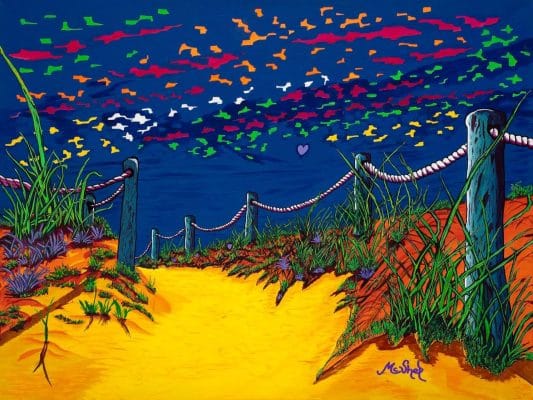
A luminous coastal dune scene inspired by Long Beach Island, painted in fluorescent acrylics with hidden hearts and black-light glow.
After I completed Always on Vacay, I hung the original in our master bedroom directly across from our bed. It stayed there for about eight months. Every morning and every evening I’d look at it, enjoying the colors and the feeling it brought to the room.
Then one day, something caught my eye.
I suddenly realized it needed one small highlight.
Just one.
I took the painting down, carried it back into my studio, added that single brushstroke, and rehung it.
To anyone else, that tiny change might have gone completely unnoticed.
To me, it made all the difference.
That one highlight brought the painting into balance. From that moment on, I knew it was truly finished.
Experiences like that have taught me not to rush the process.
A painting isn’t finished because the calendar says it is. It isn’t finished because I’m eager to start the next one. It’s finished only when nothing else needs to be said.
That doesn’t mean I’m looking for perfection.
Perfection is impossible.
What I’m looking for is harmony.
I want every color, every shape, every shadow, and every highlight to work together to tell the story I set out to paint. Sometimes that happens quickly. Sometimes it takes weeks. And occasionally, as Always on Vacay reminded me, it takes months of living with a painting before the final answer becomes clear.
One of the hardest lessons I’ve learned as an artist is knowing when to stop.
It’s tempting to keep adding details, believing that one more brushstroke will make the painting even better. But I’ve discovered the opposite can also be true. One brushstroke too many can take away the freshness and spontaneity that gave the painting its life in the first place.
Experience has taught me to trust my instincts.
When I finally sign a painting, it’s more than adding my name.
It’s my way of saying, “This story is complete.”
Only then is it ready to leave my studio and begin the next chapter of its journey in someone else’s home.
How Fluorescent Acrylics Changed My Art
Every artist reaches a point where they begin looking for something new.
For me, that moment came when I discovered fluorescent acrylics.
At first, I was simply curious. I wondered if these unique paints could add a little more vibrancy to my landscapes. What I didn’t realize was that they would completely change the way I thought about painting.
Under normal lighting, fluorescent acrylics produce brilliant, luminous colors that make my Southwest landscapes come alive. The reds seem richer. The skies become more vibrant. The paintings have an energy that immediately draws people in.
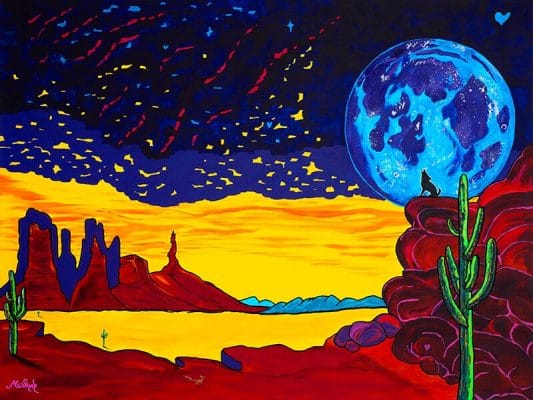
Coyote’s Lunar Serenade” – Sedona print with two coyotes under a glowing moon and a roadrunner added by fellow artist Robert Shields.
Enjoy the magic of the Southwest with this free downloadable wallpaper of Coyote’s Lunar Serenade.[/caption]
But the real surprise happens under black light.
Many of my original paintings reveal an entirely different personality. Colors begin to glow, details become more pronounced, and the artwork takes on a new sense of depth and atmosphere. It’s as though the painting has been quietly keeping a second story to itself, waiting for just the right moment to reveal it.
That transformation fascinated me.
Instead of creating two separate paintings, I realized I could create one painting that offered two completely different viewing experiences.
This wasn’t about adding a novelty or a special effect.
It became another artistic tool.
As I experimented with fluorescent acrylics, I learned that they had to be used with purpose. Too much would overwhelm the painting. Too little wouldn’t create the transformation I envisioned. Finding that balance became part of the creative challenge.
Today, fluorescent acrylics allow me to paint more than a landscape.
They allow me to paint light itself.
Many collectors first fall in love with a painting under normal room lighting. Then, when they experience it under black light for the first time, they often react with amazement. It’s one of my favorite moments because they’re seeing the painting in a way they never expected.
While my original paintings fully embrace this day-to-night transformation, my Limited Edition Hand-Embellished Giclées also include hand-painted fluorescent accents. They capture much of that same luminous experience while making my artwork available to collectors at about one-third the cost of owning an original.
Looking back, discovering fluorescent acrylics didn’t change what inspires me.
Sedona’s red rocks, the Southwest desert, dramatic skies, and peaceful landscapes remain at the heart of my work.
What changed was how I could express those feelings.
Fluorescent acrylics gave me a new visual language—one that allows a painting to evolve as the light changes, rewarding curiosity and inviting collectors to experience the artwork in an entirely new way.
They didn’t change my vision.
They gave my vision another dimension.
Painting the Feeling, Not the View
One of the questions I hear most often is,
“Does Sedona really look like that?”
Sometimes it does.
Most of the time…
Not exactly.
If I wanted to paint exactly what I saw, I’d simply take a photograph.
Photography beautifully captures a single moment in time.
Painting allows me to capture something much more personal.
It allows me to paint how a place felt.
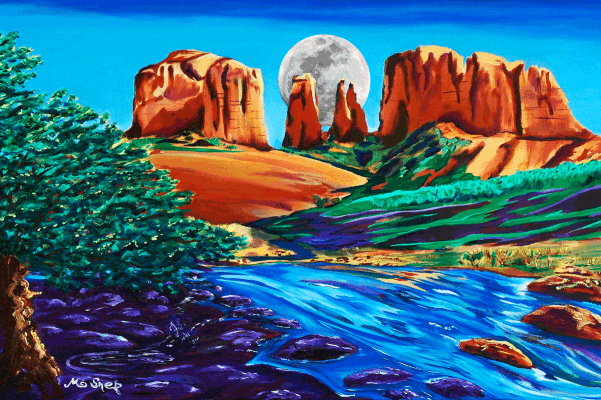
A mystical full moon graces Cathedral Rock in this luminous Sedona scene.
When I stand in front of Cathedral Rock, Devil’s Bridge, or Monument Valley, I’m not just looking at rocks, trees, and sky.
I’m experiencing the warmth of the sun.
The quiet sound of Oak Creek flowing over the stones.
The excitement of an approaching monsoon.
The peace that settles over the landscape just before sunset.
Those feelings become part of every painting.
That’s why my skies are often more dramatic than reality.
The colors may be richer.
The reflections more inviting.
A hidden heart might appear in the rocks.
A hummingbird may arrive to bring life to the scene.
These aren’t changes made for the sake of being different.
They’re choices that help me express what I experienced rather than simply what I observed.
Over the years, I’ve realized that every artist has two choices.
You can paint the landscape.
Or you can paint your relationship with the landscape.
I’ve always chosen the second.
That’s also why I continue returning to the same places.
Cathedral Rock hasn’t changed nearly as much as I have.
Each visit brings new experiences, new emotions, and a new story waiting to be told.
The painting becomes less about the location…
…and more about the memory.
People sometimes tell me that my paintings feel dreamlike.
I smile when I hear that because memories are often like dreams.
We don’t remember every tiny detail.
We remember how a place made us feel.
That’s exactly what I hope my paintings capture.
Not just the beauty of Sedona.
But the wonder of being there.
If one of my paintings reminds you of a special place you’ve visited, inspires you to explore the Southwest, or simply brings a sense of peace each time you walk by it, then I’ve accomplished what I set out to do.
Because in the end…
I’m not painting the view.
I’m painting the feeling.
Why Do My Paintings Glow Under Black Light?
One of the questions I hear most often is, “Why do your paintings glow under black light?”
The answer is simple: I use specially selected fluorescent acrylic paints as part of my creative process. These paints allow me to create artwork that has two distinct personalities.
In normal lighting, you’ll see the vibrant Southwest landscapes that inspired the painting—glowing sunsets, dramatic red rock formations, colorful skies, and rich desert colors. But woven into those familiar scenes are layers of fluorescent color that add depth, brilliance, and energy. Even in ordinary daylight, those layers contribute to the painting’s unique luminosity.
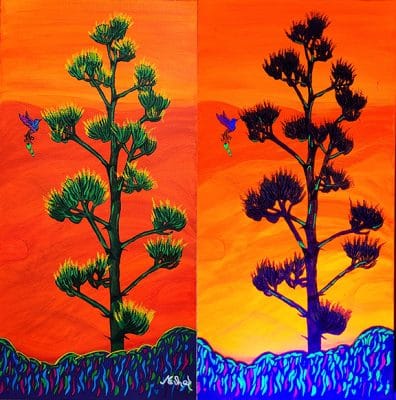
See the remarkable day-to-night transformation of *Century’s Final Song*. The left image shows the painting in normal daylight, while the right reveals its luminous fluorescent colors under black light.
Under black light, those same fluorescent layers become more pronounced, revealing another dimension of the artwork. Colors become more vibrant, details emerge in new ways, and the painting takes on a completely different mood. It’s not a different painting—it’s another way of experiencing the same work of art.
I don’t create these paintings as a novelty or a special effect. Every fluorescent layer is intentionally placed to enhance the emotion, atmosphere, and sense of wonder that I want each painting to convey. My goal has always been to create artwork that invites you to look a little longer and discover something new each time you see it.
The transformation under black light is simply another expression of that vision. Whether displayed in natural daylight, gallery lighting, or an evening setting, I want my paintings to bring warmth, color, and a sense of discovery to the spaces they call home.
If you have the opportunity to visit my Sedona Art Studios, I’d be delighted to show you how my original fluorescent acrylic paintings transform. Seeing them in person is an experience that photographs simply can’t fully capture.
The Stories Behind My Paintings
Every painting has a story.
Some begin with a quiet moment on a trail in Sedona. Others are inspired by an old photograph, an unforgettable sunset, a chance encounter, or a memory that refuses to fade. Occasionally, the story unfolds over decades before the first brushstroke ever touches the canvas.
People often ask me, “What inspired this painting?”
The answer is rarely as simple as what I saw.
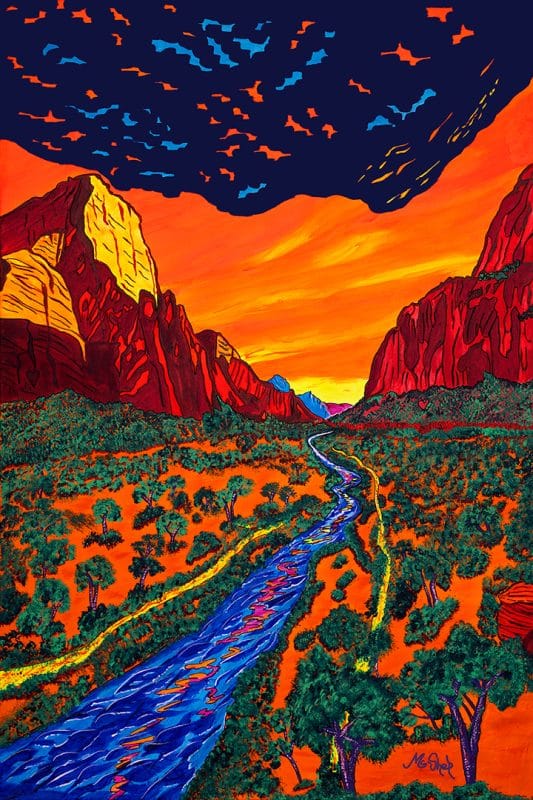
The Watchman’s Glow” captures Zion National Park with fluorescent acrylics, glowing skies, and the winding Virgin River below.
I don’t paint photographs. I don’t try to create exact copies of the landscape. Instead, I paint how a place made me feel. Over time, those memories blend with imagination, color, and emotion until they become something entirely new.
That’s why many of my paintings include details you would never find in nature. A glowing sky. Hidden hearts. A whimsical hummingbird. A moon that’s a little larger than life. These aren’t accidents—they’re part of the story I want each painting to tell.
As my work evolved, I also began using fluorescent acrylics. Under normal light, you’ll see the vibrant Southwest landscapes I created. Under black light, many of my original paintings reveal an entirely different personality, adding another chapter to the story that isn’t immediately visible.
This Behind the Canvas series is where I’ll share those stories with you.
You’ll discover what inspired each painting, the people and places that influenced it, the unexpected moments that shaped it, and the personal experiences hidden beneath the layers of paint. Some stories are deeply personal. Others are humorous. A few have taken years to fully understand myself.
Whether you’re a collector, an art enthusiast, or simply curious about the creative process, I hope these stories help you see my paintings through my eyes.
Art isn’t just about what hangs on a wall.
It’s about the journey that brought it to life.
I invite you to explore the stories behind each painting and discover why every piece in my collection has a life of its own—long before it ever found its way into your home.
Hidden Hearts and Hidden Surprises
One of the questions I hear most often is, “Did you really hide hearts in this painting?”
The answer is yes.
Not in every painting, but in many of them.
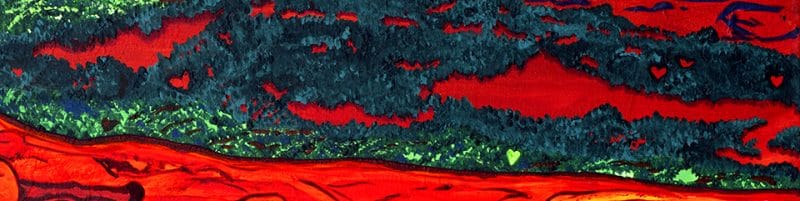
Look closely. Many of my paintings contain hidden hearts and other surprises waiting to be discovered.
It all began years ago when I discovered how much fun it was to hide a small surprise within a landscape. At first, it was simply a creative challenge—could I tuck something meaningful into a painting without it immediately revealing itself? Before long, those hidden details became something collectors began looking for every time they visited my gallery.
The hearts are never meant to distract from the painting. They’re woven naturally into the landscape, becoming part of the rocks, trees, clouds, or reflections. Sometimes visitors find one heart almost immediately. Then they discover another…and another. Before long, they’re smiling as they realize there are far more hidden throughout the painting than they first imagined.
Watching people make those discoveries never gets old.
For me, the hearts symbolize something deeper than romance. They represent our connection to nature, to the people we love, and to the places that leave a lasting impression on our lives. They’re little reminders that beauty often reveals itself only after we slow down and truly look.
But the hearts aren’t the only surprises you’ll find.
A whimsical hummingbird may appear where you least expect it. A coyote may quietly blend into the rocks. A roadrunner might be tucked into the desert landscape. Sometimes the surprise is simply the way a painting changes under black light, revealing glowing colors that weren’t obvious at first glance.
I’ve always believed that great art rewards curiosity.
The longer you spend with a painting, the more it gives back.
Some collectors tell me they’ve lived with one of my paintings for years and still discover details they had never noticed before. I love hearing those stories because that’s exactly what I hope my work will do—continue revealing itself over time.
Life is full of hidden treasures.
I simply enjoy hiding a few of them in my paintings.
So the next time you’re looking at one of my landscapes, take your time. Look a little closer. Wander through the scene instead of just glancing at it.
You never know what you might discover.
From Photograph to Painting
One of the questions I’m asked most often is, “Was this painted from a photograph?”
The answer is yes…and no.
Many of my paintings begin with a photograph. Sometimes it’s one I’ve taken while exploring the Southwest. Other times, it’s an image that captures a fleeting moment in nature that simply couldn’t be recreated. But that’s only where the journey begins.
A photograph records a single instant in time.
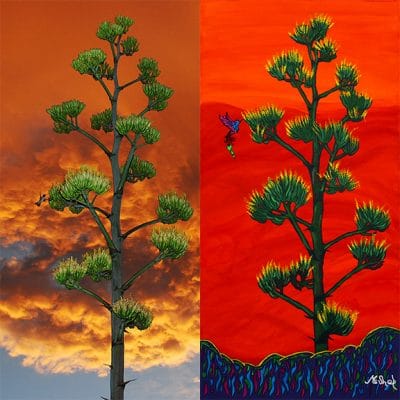
A photograph may provide the inspiration, but imagination transforms it into an original painting.
A painting has the freedom to tell a much bigger story.
When I begin painting, I’m not trying to copy every detail that’s in front of me. Instead, I ask myself a different question:
“How can I capture the feeling this place gave me?”
That’s when the creative process really begins.
The light may become warmer. The sky may grow more dramatic. A winding path might invite you farther into the scene. A hummingbird may appear where there wasn’t one before. Hidden hearts may quietly become part of the landscape. Each decision moves the painting farther away from simply documenting a place and closer to expressing an experience.
Sometimes a painting changes so much during the process that only I know how closely it resembles the original photograph.
One of the best examples is Century’s Final Song.
The inspiration came from an award-winning photograph by author and photographer Beverly Kievman Copen, who graciously gave me permission to create my own interpretation. Her remarkable image captured a once-in-a-lifetime Sedona monsoon sunset and a blooming century plant. Rather than reproduce her photograph, I used it as a springboard for my own artistic vision—adding my signature use of color, a whimsical hummingbird, hidden hearts, and the expressive skies that have become part of my style.
That’s the difference between inspiration and imitation.
Throughout history, artists have looked to nature, sketches, and photographs for ideas. What makes each painting unique is the artist’s vision, imagination, and personal voice.
Every brushstroke reflects a choice.
Every color tells part of the story.
Every painting becomes something that never existed before.
The photograph may open the door, but imagination is what carries me through it.
By the time a painting is finished, it no longer belongs to the photograph that inspired it.
It has become a story entirely its own.
The Meaning Behind My Titles
Choosing the title of a painting isn’t an afterthought.
In many ways, it’s the final brushstroke.
Sometimes a title comes to me before I ever pick up a paintbrush. Other times, I’ll live with a finished painting for days—or even weeks—before the right words finally appear. Until then, it simply isn’t complete.
I’ve never liked titles that only describe what’s in the painting.
“Cathedral Rock at Sunset” may tell you what you’re looking at, but it doesn’t tell you how I felt when I created it. I want my titles to spark curiosity, invite imagination, and encourage you to look a little deeper.
That’s why you’ll find titles like Coyote’s Lunar Serenade, Century’s Final Song, Sedona’s Cathedral Serenity, and Beyond the Beaten Path. Each one hints at a story without giving everything away. My hope is that the title becomes the opening sentence, while the painting finishes the story.
Sometimes a title reflects the emotion I experienced while painting.
Sometimes it captures a fleeting moment in nature.
Other times, it’s inspired by a conversation, a memory, or an unexpected idea that simply fits the spirit of the artwork.
One of my favorite examples is Pitiado.
Years ago, while advertising on a Midwest radio station, I was searching for the perfect title for a new painting. The radio host suggested turning it into a listener contest, offering a signed giclée print to the person who came up with the best name.
Ironically, the winning title came from the host himself.
He suggested Pitiado, a word that refers to decorative embroidery created with thread made from the fiber of the century plant. The name captured the spirit of the painting so well that it immediately felt right—and it has remained its title ever since.
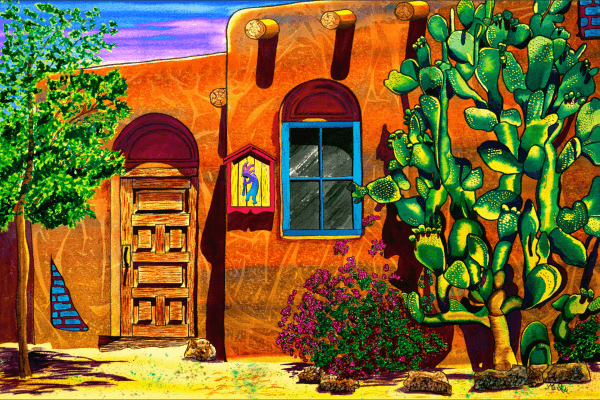
Own the one-of-a-kind “Pitiado”—a glowing tribute to Sedona and cultural craftsmanship.
That experience reminded me that inspiration can come from the most unexpected places. While the painting begins in my studio, its story sometimes grows through the people I meet along the way.
Occasionally, finding the right title is one of the hardest parts of the entire creative process.
I’ve been known to ask friends, collectors, and family members for ideas. They often see something in the painting that I hadn’t considered, and those conversations can lead me in a direction I never expected. In the end, though, the title has to feel right to me. When it does, I know it.
A title should never explain everything.
It should leave room for your own interpretation.
I’ve always believed that art is a conversation between the artist and the viewer. The painting tells part of the story, and your own experiences complete it. That’s why two people can stand in front of the same painting and come away with entirely different feelings—and both are right.
Some of my titles carry personal meaning that only I fully understand.
Others are more straightforward.
But every one of them is chosen with care because I know those few words will become part of the painting’s identity for years to come.
The next time you look at one of my paintings, don’t just study the artwork.
Read the title.
Then ask yourself what it adds to the story.
You might discover that the title isn’t describing the painting at all.
It’s inviting you into it.
🌄 My Journey
Growing Up with an Artist Father
Long before I ever + picked up a paintbrush, art was already part of my life.
My father, Kip Sheppard, was a freelance commercial artist whose talent and creativity filled our home. As a young boy, I was fascinated watching him work. While other kids were outside playing, I often found myself standing quietly beside his drawing table, watching blank sheets of paper transform into finished illustrations.
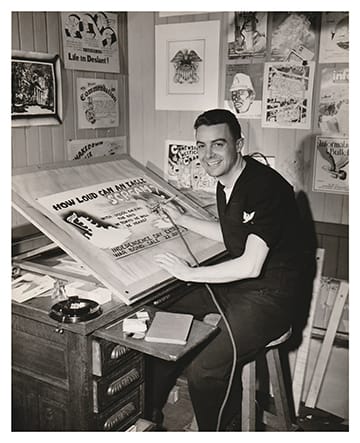
My father, Kip Sheppard, serving as a U.S. Navy Fleet Artist in June 1943. A lifelong commercial artist, he filled our home with creativity. Although I didn’t begin painting until I was 45, art was always part of my life growing up.
To me, it seemed like magic.
Dad had studied at the Art Students League of New York and later worked alongside Max Fleischer, the legendary animator behind Betty Boop and Popeye. He used the rotoscope process, a groundbreaking animation technique for its time, helping bring drawings to life one frame at a time.
Of course, as a child, I had no idea how remarkable that was.
I simply knew my dad could create things with a pencil that amazed me.
People often assume he taught me how to draw or paint.
He didn’t.
Back then, children were expected to be seen and not heard. I watched him work, but he never sat me down to explain perspective, composition, color, or any of the fundamentals of art. He never showed me how to draw. I received no formal instruction from him at all.
What he gave me wasn’t lessons.
He gave me an example.
Without realizing it, I was learning something just by watching his dedication, patience, and craftsmanship. Those quiet hours spent observing him stayed with me, even though neither of us knew it at the time.
Life eventually took me in different directions, and it wasn’t until I was 45 years old that I discovered painting for myself. Everything I know about painting, I taught myself through books, workshops, experimentation, countless mistakes, and years of practice. I found my own voice one brushstroke at a time.
As my style developed, I wasn’t interested in painting exactly the way my father drew. Instead, I created my own path through colorful Southwest landscapes, expressive skies, hidden hearts, and eventually fluorescent acrylics that reveal a second personality under black light.
Looking back, I realize my father’s greatest gift wasn’t teaching me techniques.
It was showing me, by example, what it means to dedicate yourself to creating something with your own hands.
Today, when I’m standing at my easel, I occasionally think back to those childhood days of watching him work. I can still picture his concentration, the confidence of each stroke, and the quiet satisfaction that came from creating something from nothing.
People sometimes ask where my love of art began.
The answer is simple.
It began with a little boy quietly watching his father create.
The artist I became, however, was one I had to discover on my own.
Discovering Painting at 45
If you had met me before I turned 45, you probably never would have guessed I’d become a professional artist.
I certainly wouldn’t have.
Although I grew up surrounded by art, I didn’t grow up as an artist. My father, Kip Sheppard, was a talented commercial artist, but he never taught me how to draw or paint. Like many children growing up in the 1950s and ’60s, I quietly watched from the sidelines, fascinated by what he could create, never imagining that one day I’d be standing at my own easel.
Everything changed in 1990.
Curious to see whether I had inherited any artistic ability, I enrolled in an adult evening watercolor class at a local high school in New Jersey.
I quickly discovered watercolor wasn’t nearly as easy as I had imagined.
That first class led to my very first painting, Morning Glories and Butterfly.
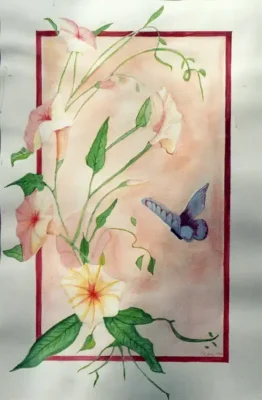
My very first watercolor painting, created in art class – capturing the delicate beauty of morning glories and a whimsical butterfly
Looking at it today, I smile.
It certainly wasn’t a masterpiece, but it was the beginning of something much bigger than I realized at the time.
Fortunately, someone else saw that potential.
My friend and tennis mentor, Gordon Haas, encouraged me to keep painting. His guidance and honest critiques gave me the confidence to continue learning, experimenting, and improving. More than three decades later, Gordon still critiques my work, and I’m grateful for the role he played in helping launch this unexpected journey.
For the next twenty years, painting became an important part of my life.
Then something unexpected happened.
After moving to Sedona, life became busy, and painting slowly faded into the background. Eventually, I stopped painting altogether.
For five years, from 2010 through 2015, I never picked up a brush.
At the time, I honestly believed that chapter of my life might be over.
Thankfully, I was wrong.
When I finally returned to painting, everything felt different. My first major painting after that long break was Creekside Cathedral. I had no way of knowing it would become one of the most important paintings of my career, eventually being licensed by Warner Bros. and launching an entirely new chapter of my artistic journey.
Looking back, I realize those five years taught me something valuable.
Sometimes stepping away allows you to return with fresh eyes, renewed passion, and a deeper appreciation for the work you love.
People often tell me, “I wish I’d started sooner.”
I understand that feeling.
But my own story reminds me that it’s never too late to discover something that changes your life.
At 45, I wasn’t beginning a career.
I was simply following my curiosity.
That curiosity eventually led to galleries, collectors around the world, international exhibitions, and a lifetime of opportunities I never could have imagined.
Every time I look at Morning Glories and Butterfly, I’m reminded that every artist begins somewhere.
Mine began with a simple question:
“I wonder if I can paint?”
I’m grateful I decided to find out.
The Paintings That Changed My Career
People often ask me which painting is my favorite.
That’s an impossible question to answer.
Every painting has taught me something. Every one represents a different season of my life as an artist.
But a handful of paintings did something more.
They changed the direction of my career.
Morning Glories and Butterfly
My very first watercolor painting, created in art class – capturing the delicate beauty of morning glories and a whimsical butterfly
Every journey has a beginning.
Mine started with a simple watercolor called Morning Glories and Butterfly. It was the very first painting I completed after enrolling in an evening watercolor class at the age of 45.
Looking at it today, I smile.
It wasn’t the painting that changed my career.
It was the painting that changed me.
Without that first step, none of the paintings that followed would have existed.
Goulding’s Stagecoach
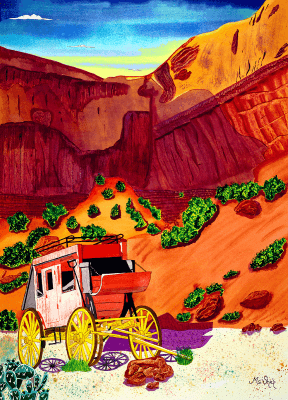
The original watercolor was purchased by Goulding’s Lodge and selected to hang in the historic Stagecoach Dining Room, where it welcomed visitors from around the world.
The first time I realized my artwork could find a permanent home in a special place came with Goulding’s Stagecoach.
The original watercolor was purchased by Goulding’s Lodge in Monument Valley and selected to hang in the historic Stagecoach Dining Room.
For an artist still finding his way, that recognition meant everything.
It gave me confidence that my work could stand alongside the landscapes that had inspired generations of Western artists.
Monument Valley at John Ford Point
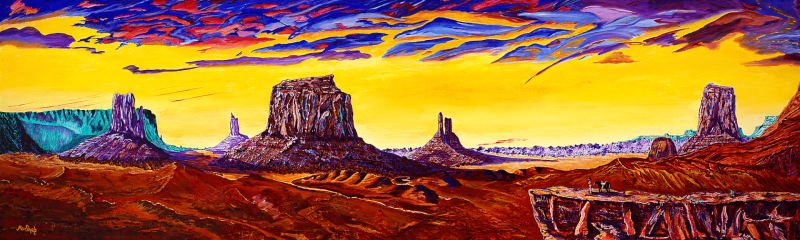
Monument Valley panorama inspired by John Ford Point and the cinematic history of the American West
Not long after arriving in Sedona, I challenged myself to create the largest painting I had ever attempted.
Monument Valley at John Ford Point measured ten feet wide.
My studio wasn’t large enough, so I moved into my garage, built an extension onto my easel, and spent nearly six months painting it a little at a time.
It taught me not to fear ambitious projects.
Twenty years later, that same painting found its home through Desert Valley Gallery in Las Vegas.
Looking back, it’s amazing how a painting created in my garage would eventually begin a new chapter two decades later.
Creekside Cathedral
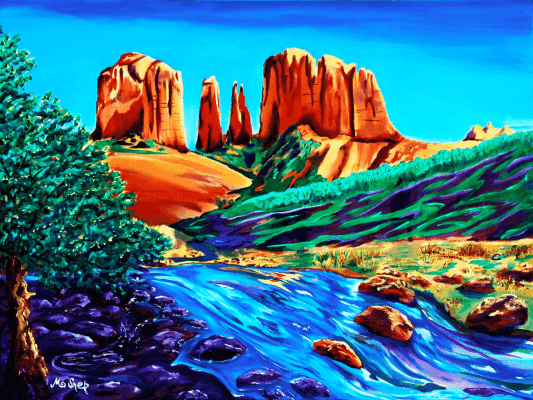
After a five-year break from painting, Creekside Cathedral marked my return to the easel and became one of the most important turning points in my artistic career.
Sometimes the most important painting isn’t the biggest.
It’s the one that brings you back.
After taking a five-year break from painting, I finally returned to the easel to create Creekside Cathedral.
I had no idea that painting would become the beginning of my Cathedral Rock series or that it would later be licensed by Warner Bros. for the movie Snatchers.
More importantly, it reminded me why I loved painting in the first place.
Without Creekside Cathedral, much of what I’ve painted since simply wouldn’t exist.
Inspired
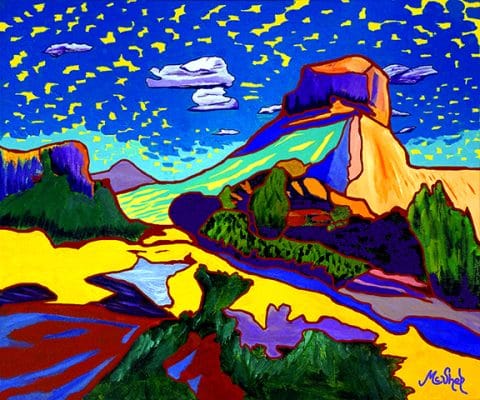
“Inspired” marks the beginning of my Vivid Mystical Landscapes style—painted before I discovered fluorescent acrylics,.
Artists never stop learning.
After attending a workshop with artist Claudia Hartley, I began experimenting with patterned skies and a more expressive use of color.
The painting Inspired marked that turning point.
It encouraged me to trust my imagination more fully and opened the door to a style that has become an important part of my work today.
Sometimes a workshop doesn’t just teach you new techniques.
Sometimes it changes the way you see.
Sky of Grace

“Sky of Grace” is a panoramic landscape celebrating spiritual symbolism, painted by Clark Sheppard and sold in China.
One of the greatest surprises of my career happened halfway around the world.
During my exhibition in Guangzhou, China, Sky of Grace became the very first painting to sell.
It was the beginning of an unforgettable experience.
By the end of the exhibition, all twelve of my original paintings—including Creekside Cathedral, Fire in the Sky, Sweet Dreams, Iconic Saguaro, Sedona Cactus, and others—had found new homes with collectors in China.
That experience reminded me that great art doesn’t need a common language.
It speaks for itself.
Century’s Final Song
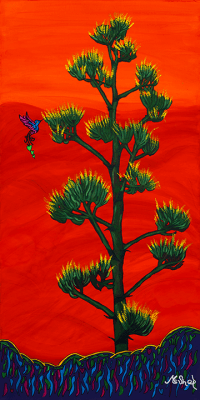
Inspired by Beverly Kievman Copen’s award-winning Sunset of the Century photograph, this original fluorescent acrylic painting reimagines one unforgettable Sedona evening through my own artistic vision.
Even after decades of painting, I still find myself growing.
Century’s Final Song reminded me that inspiration can come from unexpected places.
Inspired by an award-winning photograph from author and photographer Beverly Kievman Copen, the painting became much more than a recreation of a beautiful moment.
It became an interpretation—one shaped by my own memories, imagination, and artistic voice.
To me, it represents something every artist should continue doing.
Growing.
Learning.
Seeing familiar subjects with fresh eyes.
Looking Back
When I look around my studio today, I don’t simply see paintings.
I see milestones.
Each one represents a lesson learned, a door that opened, or a moment that changed the direction of my journey.
Together, they’ve shaped the artist I’ve become.
And if my experience has taught me anything, it’s this:
The next painting always has the potential to become the one that changes everything.
Why I Paint Sedona the Way I Do
People often ask me why my paintings don’t look exactly like Sedona.
My answer is simple.
They’re not meant to.
If I wanted to create an exact copy of what I saw, I’d take a
photograph. Photography is a wonderful art form, but painting gives me the freedom to go beyond what the camera can capture.
When I stand in front of Cathedral Rock, Devil’s Bridge, Bell Rock (aka) Star Stuff, or one of Sedona’s countless canyons, I’m not just seeing the landscape. I’m feeling the warmth of the late afternoon sun, listening to the breeze move through the trees, and taking in the sense of peace that makes Sedona unlike anywhere else I’ve ever been.
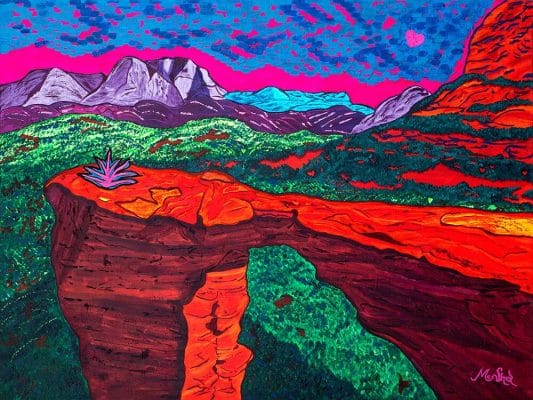
Sedona’s iconic sandstone arch under a luminous sky.
That’s what I try to paint.

Star Stuff by Sedona Artist, Clark Sheppard Vivid, Mystical Landscapes
Over the years, I’ve learned that a painting doesn’t have to be literal to be believable. Sometimes a richer sky, a more dramatic composition, or a burst of unexpected color can express an emotion more honestly than simply copying nature.
That’s why you’ll often see glowing skies, vibrant colors, hidden hearts, playful wildlife, and light that feels almost magical. Those aren’t attempts to change Sedona—they’re my way of sharing how Sedona feels to me.
Many of my newer paintings are created with fluorescent acrylics, allowing them to reveal an entirely different personality under black light. It isn’t a gimmick. It’s another way to express the wonder, mystery, and energy I experience in these remarkable landscapes.
Every painting begins with a real place.
What happens after that comes from memory, imagination, and emotion.
Some collectors have told me they recognize the location immediately, yet they also feel as though they’ve stepped into a dream. I take that as one of the nicest compliments I can receive because that’s exactly what I’m trying to create.
My goal has never been to paint postcards.
My goal is to paint experiences.
I want you to remember what it felt like to stand beside Oak Creek, watch the last light disappear behind Cathedral Rock, or witness a summer monsoon roll across the red rocks. Even if you’ve never visited Sedona, I hope my paintings allow you to experience its beauty through my eyes.
Every artist sees the world differently.
This is the Sedona I see.
And I’m grateful to share it with you.
The Evolution of My Cathedral Rock Series
If there’s one subject that has shaped my artistic journey more than any other, it’s Cathedral Rock.
People sometimes ask why I keep painting the same landmark.
The truth is, I don’t.
I paint the same place, but never the same experience.
Cathedral Rock has become a lifelong conversation between me and the landscape. Every visit brings different light, changing seasons, shifting reflections, dramatic skies, and new emotions. Each painting captures a moment that can never be repeated.
My journey with Cathedral Rock took on special meaning after I completed Creekside Cathedral in 2015. It was my first painting after taking a five-year break from painting, and I had no idea it would become such an important turning point in my career. A year later, it was licensed by Warner Bros. for the movie Snatchers, giving the painting an unexpected life beyond my studio.
After a five-year break from painting, Creekside Cathedral marked my return to the easel and became one of the most important turning points in my artistic career.
That experience inspired me to look at Cathedral Rock in an entirely new way.
Instead of searching for a different location, I began searching for different stories.
Over the years, my Cathedral Rock series has grown to include paintings that celebrate changing seasons, glowing sunsets, moonlit evenings, peaceful reflections, dramatic panoramas, and even the hidden surprises that collectors have come to enjoy discovering.
As my style evolved, so did the paintings.
What began with traditional landscapes gradually became more expressive. Richer colors, more dynamic skies, hidden hearts, whimsical details, and eventually fluorescent acrylics allowed me to create paintings that transformed under black light, revealing a second personality that simply wasn’t possible before.
Each new painting taught me something.
Some taught me patience.
Others taught me restraint.
A few reminded me that the best ideas often arrive unexpectedly once I stop trying to force them.
One of the greatest lessons Cathedral Rock has given me is that inspiration never runs out.
The mountain hasn’t changed.
I have.
Every year I see it with fresh eyes, new experiences, and a deeper appreciation for what first drew me there. That’s why each painting becomes another chapter rather than another copy.
Today, the Cathedral Rock series represents far more than a collection of landscapes.
It tells the story of my growth as an artist.
From Creekside Cathedral to Cathedral Moon, Sacred Reflections, Pure Joy, Lover’s View, Sedona’s Cathedral Serenity, and many others, each painting marks a moment in my creative journey.
I don’t know how many Cathedral Rock paintings I’ll eventually create.
What I do know is that as long as the landscape continues to inspire me, there will always be another story waiting to be painted.
And I look forward to sharing that next chapter with you.
❓ Questions I Hear Most
More Frequently Asked Questions About My Art
Over the years, I’ve had the pleasure of meeting thousands of visitors, collectors, and art enthusiasts in my galleries and studio. While every conversation is different, there are certain questions I hear again and again.
Here are some of the most common.
Do you paint from photographs?
Sometimes—but only as a starting point.
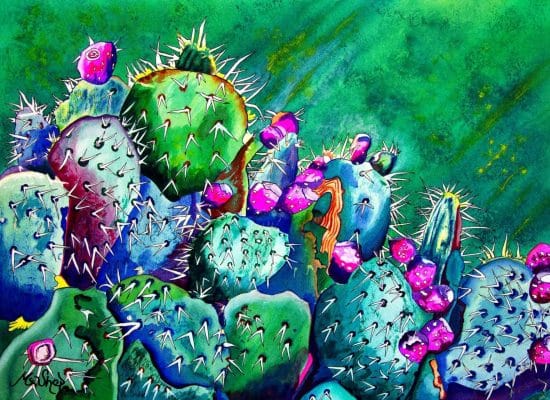
Sedona Cactus, watercolor artwork inspired by my first day arriving in Sedona
A photograph may capture a beautiful moment, but my goal isn’t to copy it. I use photographs, sketches, and memories as inspiration, then let the painting evolve through imagination, color, and emotion. By the time it’s finished, it has become its own unique work of art.
Are these real places?
Yes.
Many of my paintings are inspired by real locations throughout Sedona and the American Southwest. You’ll recognize places like Cathedral Rock, Bell Rock, Devil’s Bridge, Zion National Park, Monument Valley, and many others. While the locations are real, I often enhance the colors, light, composition, or atmosphere to capture how the place felt rather than simply how it looked.
Why do some of your paintings glow under black light?
Many of my newer original paintings are created with fluorescent acrylics. Under normal lighting, they appear vibrant and colorful. Under black light, they reveal glowing colors and details that create an entirely different viewing experience.
My Limited-Edition Hand-Embellished Giclées also include hand-painted fluorescent accents, allowing collectors to enjoy much of that same luminous effect at about one-third the cost of an original.
Do you really hide hearts in your paintings?
I do!
Many of my paintings contain hidden hearts woven naturally into the landscape. Some have only a few, while others contain many more. They aren’t meant to be obvious. I enjoy rewarding people who take the time to slow down, explore the painting, and discover its hidden surprises.
How long does it take to finish a painting?
That depends on the painting.
Some are completed in a few weeks, while others evolve over several months. The actual painting time is only part of the process. Many ideas spend months—or even years—developing before I ever begin painting.
What's your favorite painting?
That’s a little like asking which child is my favorite!
Every painting represents a different chapter of my artistic journey. Some are personal milestones, others pushed me creatively, and a few completely surprised me. My favorite often changes depending on which one I’m standing in front of.
Can I see your original paintings in person?
Absolutely.
There’s nothing quite like experiencing original artwork in person. You can often find my work in galleries, and I also welcome visitors to my complimentary studio tour, where you can see current paintings, works in progress, and learn more about my creative process.
Do you offer prints?
Yes.
Many of my paintings are available in several formats, including Limited- Edition Hand-Embellished Giclées, Gallery Wraps, Metal Prints, Hand-signed heavyweight giclée art prints , Float Frames, and Gift Art Photo Plaques. My goal is to make my artwork accessible to collectors with a variety of budgets and display spaces.
How do I know which size is right?
Choosing artwork is a personal decision, and I’m always happy to help. Whether you’re looking for a statement piece above a fireplace or a smaller work for a cozy nook, I can help you select a size and format that complements your home.
Can I contact you with questions?
Of course.
One of the greatest joys of being an artist is connecting with people who appreciate my work. Whether you have a question about a specific painting, would like to schedule a complimentary studio tour, or simply want to say hello, I’d love to hear from you.
Thank you for taking the time to learn more about my artwork. I hope these answers help you better understand not only what I paint, but why I paint it.
Why Own an Original Painting?
People often ask me, “Why should I buy an original painting when prints are available?”
It’s a fair question.
The answer isn’t about one being better than the other. Prints make my artwork accessible to more people and allow collectors to enjoy my paintings in a variety of sizes and formats.
But an original is something entirely different.
When you stand in front of an original painting, you’re looking at the actual surface I spent weeks—or sometimes months—bringing to life. Every brushstroke, every layer of paint, every decision, every change of direction happened on that one canvas.
There isn’t another one like it.
As I paint, the canvas becomes a record of the journey. Some areas contain dozens of layers built up over time. Others were changed, repainted, or refined as the composition evolved. Those subtle textures and tiny details become part of the painting’s personality, telling a story that goes beyond the image itself.
Many of my originals are painted with fluorescent acrylics, giving them a second personality under black light. While my Limited-Edition Hand-Embellished Giclées beautifully capture much of that luminous experience, the original is the only place where every fluorescent layer and every brushstroke exists exactly as it left my easel.
That’s something no reproduction can fully duplicate.
When you own an original, you’re not simply purchasing a painting.
You’re becoming the caretaker of a one-of-a-kind work of art.
You’re owning the canvas that was in my studio, the one I stood in front of day after day as the painting gradually revealed itself. Every success, every correction, every moment of inspiration is preserved within that artwork.
I often tell collectors that an original has a presence that’s difficult to describe until you experience it in person.
Light plays across the surface differently.
The texture catches your eye.
You begin by noticing details that photographs simply can’t capture.
Over time, many collectors tell me something interesting.
The painting changes for them.
Not because the artwork is different, but because they continue discovering new details, new colors, and new meanings each time they spend a few quiet moments with it.
That’s one of the greatest compliments an artist can receive.
I believe original artwork creates a relationship between the artist and the collector that lasts for years.
Long after the painting leaves my studio, it becomes part of someone else’s story.
It hangs in a home where birthdays are celebrated, families gather, grandchildren visit, and memories are made. The artwork quietly becomes part of everyday life.
That thought means a great deal to me.
There’s nothing quite like owning an original.
Not because it’s more valuable.
But because there’s only one.
And once it finds its home, that story belongs to you as much as it does to me.
What’s The Difference Between an Original and a Hand-Embellished Giclée?
One of the questions I hear most often is:
“What’s the difference between an original painting and one of your hand-embellished giclées?”
It’s a great question because both are created from my artwork, but they’re very different experiences.
The Original
Every original begins as a blank canvas.
It’s the painting that sat on my easel for weeks—or sometimes months—as I sketched, painted, repainted, solved problems, and gradually brought an idea to life.
Every brushstroke is original.
Every texture was created by hand.
Every decision, every change, every layer of fluorescent acrylic exists only on that one canvas.
There will never be another one exactly like it.
Many of my originals also reveal a second personality under black light. As the fluorescent colors come alive, the painting transforms into an entirely different viewing experience. It’s something that’s difficult to appreciate until you see it in person.
Owning an original means owning the actual painting that was part of my creative journey from the very first sketch to the final signature.
There’s nothing quite like it.
The Hand-Embellished Giclée
A hand-embellished giclée begins as an exceptionally high-quality reproduction of my original painting.
But it doesn’t stop there.
After it’s printed, I personally hand-paint fluorescent acrylic highlights directly onto each one. These hand-applied accents give every piece its own unique character and allow it to glow beautifully under black light, much like the original.
No two hand-embellished giclées are exactly alike because everyone is individually finished by me.
Each is personally signed, numbered, and accompanied by a Certificate of Authenticity.
My editions are limited to just 25 pieces in the exact size of the original, ensuring they remain both collectible and exclusive.
Why I Created Them
Not every collector is ready to purchase an original painting.
I understand that.
That’s one of the reasons I began creating my Limited-Edition Hand-Embellished Giclées.
They allow collectors to own a piece that’s personally finished by me, includes the luminous fluorescent accents that have become part of my artistic style, and are available at approximately one-third the cost of an original.
For many collectors, they offer the perfect balance between affordability and owning something that’s still touched by the artist’s hand.
Which One Is Right for You?
There’s no wrong answer.
Some collectors dream of owning an original because there’s only one.
Others appreciate the value, beauty, and craftsmanship of a hand-embellished giclée.
What matters most to me is that the artwork speaks to you.
Whether it’s an original painting or a hand-embellished giclée, my hope is the same—that every time you walk past it, it reminds you of a place, a memory, or a feeling that makes you stop and smile.
After all, that’s what great art is meant to do.
Why Cathedral Rock Never Gets Old
People often ask me,
“How many times can you paint Cathedral Rock?”
The answer surprises them.
I don’t paint Cathedral Rock.
I paint my experience of Cathedral Rock.
That’s an important difference.
If my goal were simply to record what I saw, one painting would have been enough. But Cathedral Rock has never looked the same to me twice.
Sometimes it’s wrapped in the soft light of an early morning.
Sometimes it’s glowing beneath a fiery sunset.
Sometimes Oak Creek is as smooth as glass, creating perfect reflections. Other days the water is alive with ripples, changing the entire mood of the scene.
The seasons change.
The weather changes.
The light changes.
And over the years…
I’ve changed.
That’s why I continue to return.
Every visit reveals something I hadn’t noticed before. It may be the way the afternoon light catches the cliffs, the reflections dancing across the creek, or simply a feeling of peace that wasn’t there the last time I visited.
Cathedral Rock has become much more than a landmark.
It’s become a lifelong source of inspiration.
When I painted Creekside Cathedral, I had no idea it would become such an important turning point in my career. It was my first painting after a five-year break from painting, and later it found its way into a Warner Bros. movie.
After a five-year break from painting, Creekside Cathedral marked my return to the easel and became one of the most important turning points in my artistic career.
That painting opened a door.
Since then, I’ve painted Cathedral Rock from many different perspectives and in many different moods. Each painting tells a different story.
Some celebrate the peaceful beauty of Oak Creek.
Others capture dramatic skies, moonlit evenings, or the vibrant colors that have become part of my signature style.
More recently, fluorescent acrylics have allowed me to add yet another dimension, creating paintings that reveal a second personality under black light.
Even after all these years, I never begin a new Cathedral Rock painting thinking, “I’ve done this before.”
Instead, I ask myself,
“What story hasn’t been told yet?”
That’s what keeps the journey exciting.
Every painting becomes another chapter.
Every chapter teaches me something new.
People often ask if I’ll ever stop painting Cathedral Rock.
I honestly don’t know.
As long as it continues to inspire me…
As long as I continue seeing it with fresh eyes…
And as long as there’s another story waiting to be told…
I’ll keep returning.
Because Cathedral Rock never gets old.
And neither does the joy of discovering something new within a place you’ve loved for years.
“If you hear a voice within you say you cannot paint,’ then by all means paint, and that voice will be silenced,” ~ Vincent Van Gogh.
Clark’s email ~ shep@mcshep.com
Phone ~ 928-301-9268 Text Or Call