

Art Formats for Southwest Landscape Art & Wall Décor

Luminous Metal Print

Canvas Gallery Wrap
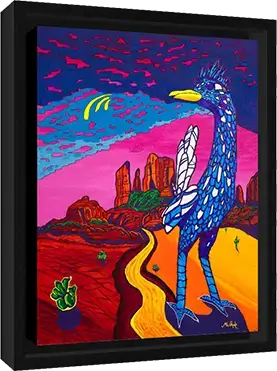
Luxurious Float-Frame

Gift Art Photo-Plaque
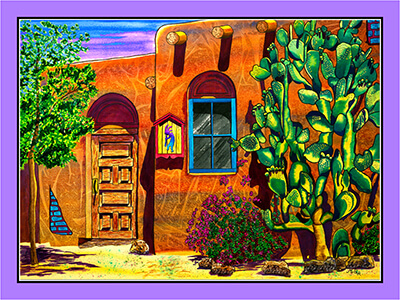
Giclée Art Print
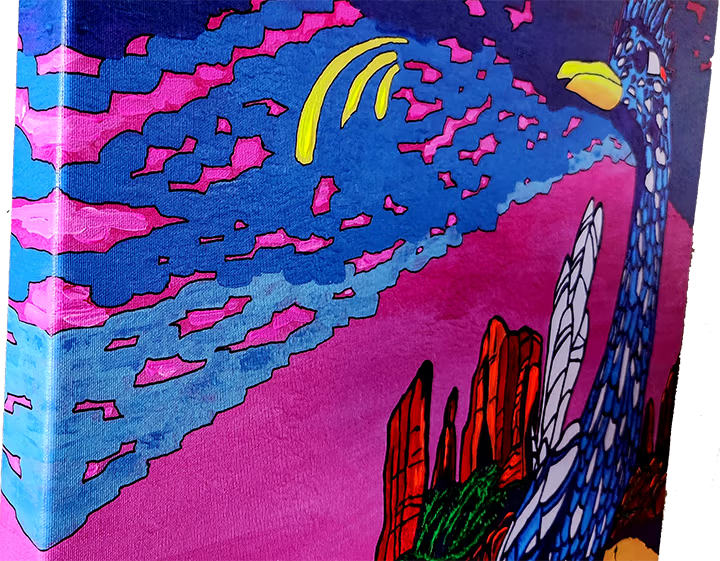
Limited Edition
Hand-Embellished Giclée
Taos Vigas: Returning to Taos
My visit to Taos New Mexico, left a lasting impression on me. There was a grounded presence in the land and architecture that felt unlike anything I had experienced growing up in New Jersey. Taos Pueblo, in particular, stood out—not as a historical monument, but as a place still actively inhabited, shaped by generations of continuity.
Taos Vigas, like many of my early Southwest watercolors, I photographed Taos Pueblo during our trip and later used those images while painting back home in New Jersey. Distance gave me perspective, allowing memory and observation to blend into something more reflective than literal.
Architecture That Carries History
The Taos Pueblo is not just a preserved relic—it is a living community. The multi-storied adobe structures have been continuously inhabited for over a thousand years, holding generations of daily life within their walls. What struck me most was the quiet permanence of the architecture itself—especially the vigas, the hand-cut wooden beams of Taos Vigas, that extend from the adobe walls.
These beams aren’t just decorative; they are functional, structural, and deeply rooted in tradition. In “Taos Vigas,” I focused on their repetition and rhythm, letting these elements guide the composition. Painting them became a way to honor the strength, balance, and continuity of the place without attempting to explain it.
Painting Structure and Rhythm
This Taos Vigas watercolor allowed me to explore repetition as a visual language. The vigas create a steady rhythm across the adobe surfaces, echoed by windows, doorways, and layered forms rising behind them. Instead of highlighting details, I focused on shape and proportion, using warm earth tones to ground the composition.
The sky stays supportive instead of overpowering, letting the architecture of Taos Vigas, convey the emotional depth of the painting. The aim wasn’t drama but stability—a sense of something meant to endure.
A Companion to Taos Pueblo
“Taos Vigas” naturally follows “Taos Pueblo.” While the earlier painting reflects the overall presence and dignity of the pueblo, this piece focuses more closely on the elements that physically hold it together. Together, they form a quiet pair—one about place, the other about structure.
Both were painted during the same New Jersey period, when I was still shaping my voice as an emerging artist and learning how observation, restraint, and respect could coexist in watercolor.
Early Foundations That Continue
Looking back, “Taos Vigas” marks an important stage in my artistic growth. It taught me to slow down and focus on what supports a place rather than just what creates its visual outline. That lesson still influences my work today, whether I’m painting in watercolor or creating my later Sedona artwork using fluorescent acrylics.
My Southwest landscapes can be seen at the Village Gallery, one of the very best galleries in all of Sedona, AZ — a place where collectors can experience my work in person.
The Heart of It All
Art lights up the same part of your brain as
falling in love—it’s an unforgettable feeling.
Collector’s Note
“Taos Vigas” is an early watercolor I painted while living in New Jersey, inspired by my visits to Taos Pueblo. Focusing on architectural rhythm and flow, it marks a pivotal point in my growth as a Sedona artist exploring Southwest art through watercolor and fluorescent acrylics.
Taos Vigas – A Watercolor Study of Structure, Rhythm, and Continuity
Price range: $49 through $705

“Taos Vigas” highlights the architectural rhythm of Taos Pueblo, where stacked adobe shapes and exposed wooden beams symbolize resilience and everyday life. This watercolor captures my early interest in structure, repetition, and the quiet strength present in the Southwest’s living history.

Taos Vigas – A Watercolor Study of Structure, Rhythm, and Continuity
Price range: $49 through $705
“Taos Vigas” highlights the architectural rhythm of Taos Pueblo, where stacked adobe shapes and exposed wooden beams symbolize resilience and everyday life. This watercolor captures my early interest in structure, repetition, and the quiet strength present in the Southwest’s living history.
Art Formats for Southwest Landscape Art & Wall Décor

Luminous Metal Print

Canvas Gallery Wrap
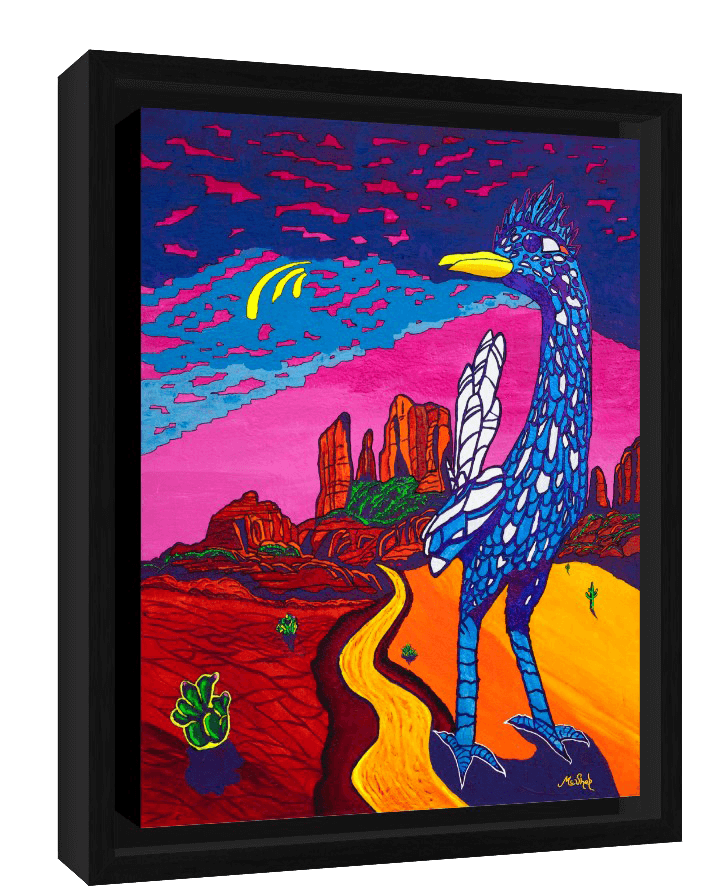
Luxurious Float-Frame

Gift Art Photo-Plaque
Giclée Art Print
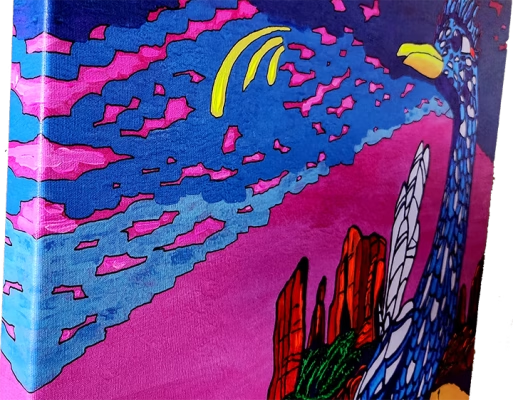
Limited Edition
Hand-Embellished Giclée
Taos Vigas: Returning to Taos
My visit to Taos New Mexico, left a lasting impression on me. There was a grounded presence in the land and architecture that felt unlike anything I had experienced growing up in New Jersey. Taos Pueblo, in particular, stood out—not as a historical monument, but as a place still actively inhabited, shaped by generations of continuity.
Taos Vigas, like many of my early Southwest watercolors, I photographed Taos Pueblo during our trip and later used those images while painting back home in New Jersey. Distance gave me perspective, allowing memory and observation to blend into something more reflective than literal.
Architecture That Carries History
The Taos Pueblo is not just a preserved relic—it is a living community. The multi-storied adobe structures have been continuously inhabited for over a thousand years, holding generations of daily life within their walls. What struck me most was the quiet permanence of the architecture itself—especially the vigas, the hand-cut wooden beams of Taos Vigas, that extend from the adobe walls.
These beams aren’t just decorative; they are functional, structural, and deeply rooted in tradition. In “Taos Vigas,” I focused on their repetition and rhythm, letting these elements guide the composition. Painting them became a way to honor the strength, balance, and continuity of the place without attempting to explain it.
Painting Structure and Rhythm
This Taos Vigas watercolor allowed me to explore repetition as a visual language. The vigas create a steady rhythm across the adobe surfaces, echoed by windows, doorways, and layered forms rising behind them. Instead of highlighting details, I focused on shape and proportion, using warm earth tones to ground the composition.
The sky stays supportive instead of overpowering, letting the architecture of Taos Vigas, convey the emotional depth of the painting. The aim wasn’t drama but stability—a sense of something meant to endure.
A Companion to Taos Pueblo
“Taos Vigas” naturally follows “Taos Pueblo.” While the earlier painting reflects the overall presence and dignity of the pueblo, this piece focuses more closely on the elements that physically hold it together. Together, they form a quiet pair—one about place, the other about structure.
Both were painted during the same New Jersey period, when I was still shaping my voice as an emerging artist and learning how observation, restraint, and respect could coexist in watercolor.
Early Foundations That Continue
Looking back, “Taos Vigas” marks an important stage in my artistic growth. It taught me to slow down and focus on what supports a place rather than just what creates its visual outline. That lesson still influences my work today, whether I’m painting in watercolor or creating my later Sedona artwork using fluorescent acrylics.
My Southwest landscapes can be seen at the Village Gallery, one of the very best galleries in all of Sedona, AZ — a place where collectors can experience my work in person.
The Heart of It All
Art lights up the same part of your brain as
falling in love—it’s an unforgettable feeling.
Collector’s Note
“Taos Vigas” is an early watercolor I painted while living in New Jersey, inspired by my visits to Taos Pueblo. Focusing on architectural rhythm and flow, it marks a pivotal point in my growth as a Sedona artist exploring Southwest art through watercolor and fluorescent acrylics.