

Art Formats for Southwest Landscape Art & Wall Décor

Luminous Metal Print

Canvas Gallery Wrap
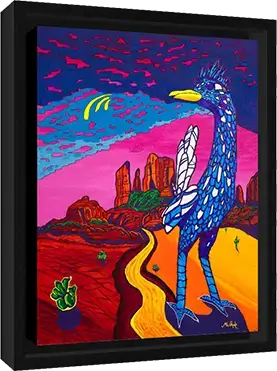
Luxurious Float-Frame

Gift Art Photo-Plaque
Giclée Art Print
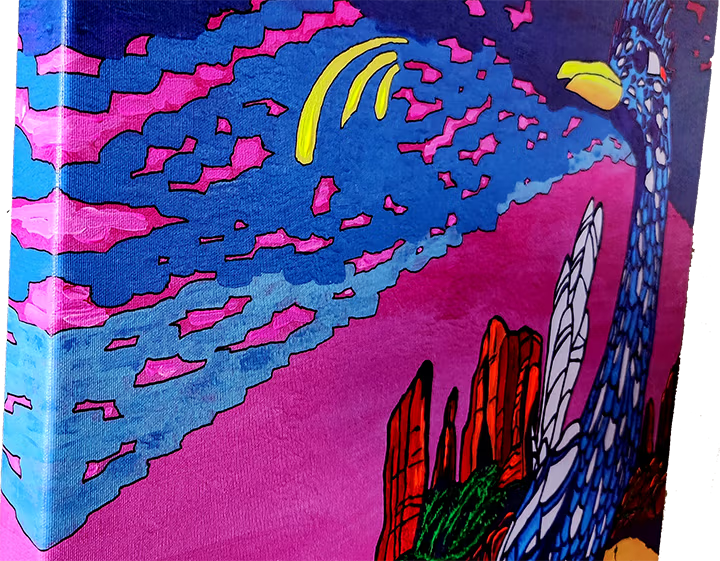
Limited Edition
Hand-Embellished Giclée
Sunbird: Before Sedona, Before Certainty
Before moving to Sedona, I believed I could earn a living selling my art at what were called tent shows. Boy, was I wrong! Promoters organized outdoor art events in cities across the Southwest, and I would load my work, set up a display, and hope to connect. One of those shows took place in Scottsdale, Arizona, during a time when everything still felt uncertain.
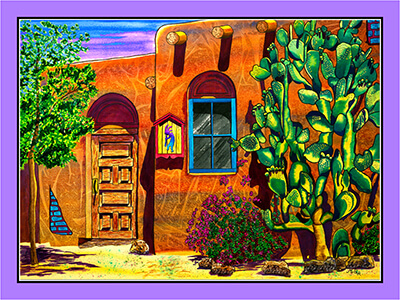
“Sunbird” belongs to that period—painted while I was still living in New Jersey, traveling whenever I could to the Southwest, and learning what it meant to be an emerging artist trying to find his footing. The painting was inspired by a visit my wife and I made to Old Town Albuquerque, where I photographed this adobe storefront that later became this watercolor artwork.
A Moment I Didn’t See Coming
During that Scottsdale tent show, I was standing about twenty feet from my display, talking with another artist. Suddenly, I heard a sharp yelp. I turned to see a woman carefully examining one of my paintings. She pointed and said, “That’s my shop.”
The painting she was holding was Sunbird. The woman was Sandra Hanks, whom I soon learned was the sister of Tom Hanks. She recognized the her storefront of “Sunbird”, immediately—it was her shop in Old Town Albuquerque.
Moments like that stay with you, not because of fame but because of validation. Something I had painted from memory and reference found its way back to the person who lived that place every day. As a watercolor artist followed by Sedona collectors today, I still think about how powerful that connection was at such an early stage.
Watercolor, Texture, and Discovery
“Sunbird” was created with watercolor techniques that kept the surface loose and lively. I emphasized warm adobe tones, weathered wood, and how desert light sinks into shadow. The hanging chile ristras, rough posts, and open doorway became visual anchors—simple elements that convey the spirit of place.
Back then, watercolor art felt more like discovery than control. I let washes flow freely, allowing the paper and pigment to work together. This approach laid the foundation for what later became my Sedona watercolor paintings, Sedona wall art, and Arizona art prints.
Surface, Texture, and Continuity
In creating “Sunbird,” I revisited a watercolor technique I had been developing — using kosher salt on wet pigment to form natural crystalline textures within the adobe surfaces. This method allowed the paint to break and bloom naturally, giving the walls a weathered, sun-worn look that felt authentic to the place rather than illustrative.
I used this same technique with “Sunbird,” in my earlier watercolor works like “Pitiado,” “Taos Pueblo,” and “Pueblo Mission,” where texture became a subtle storytelling element rather than just a visual effect. In “Sunbird,” the salt work adds gentle movement and depth, emphasizing that the Southwest reveals itself slowly—through layers, time, and restraint.
That ongoing process became a key part of my identity as an emerging artist and still influences how I approach Sedona watercolor paintings and desert landscapes today.
From Tent Shows to Sedona
Looking back, Sunbird is more than just a storefront—it symbolizes belief. Belief that art can connect strangers, travel across states, and come home in unexpected ways. That belief pushed me forward, eventually leading me to Sedona and a deeper dedication to my work.
Today, my Sedona artwork features Southwest wall art, desert landscape paintings, and mystical pieces inspired by those early lessons. While my materials and palette have changed, the essence of my work remains the same—honoring place, memory, and chance encounters.
Continuing the Journey
My artwork is featured at The Village Gallery, considered the top art gallery in Sedona. It’s an inspiring space where collectors can stand before my Sedona artwork, feel the energy of my watercolor paintings and Southwest art, and see how moments like Sunbird have helped shape the artist I continue to grow into.
The Heart of It All
Art lights up the same part of your brain as
falling in love—it’s an unforgettable feeling.
Collector’s Note
“Sunbird” is an early watercolor created while I was living in New Jersey, inspired by Old Town Albuquerque and a chance encounter at a Scottsdale tent show. It reflects a significant chapter in my journey as a Sedona artist and emerging artist.
Sunbird – A Southwest Watercolor Born from Serendipity
Price range: $49 through $705

“Sunbird” is a Southwest watercolor artwork inspired by Old Town Albuquerque, painted during my New Jersey years. This desert landscape painting captures warmth, texture, and chance encounters, reflecting an early moment when my Sedona artwork and emerging artist path began to intersect with real collectors.
✨ Enjoy the story behind the art?
You’re invited to a free Sedona studio tour — see where the magic happens.
🎁 Don’t forget to join my free art giveaway for a chance to win a gallery-wrapped canvas giclée.

Sunbird – A Southwest Watercolor Born from Serendipity
Price range: $49 through $705
“Sunbird” is a Southwest watercolor artwork inspired by Old Town Albuquerque, painted during my New Jersey years. This desert landscape painting captures warmth, texture, and chance encounters, reflecting an early moment when my Sedona artwork and emerging artist path began to intersect with real collectors.
✨ Enjoy the story behind the art?
You’re invited to a free Sedona studio tour — see where the magic happens.
🎁 Don’t forget to join my free art giveaway for a chance to win a gallery-wrapped canvas giclée.
Art Formats for Southwest Landscape Art & Wall Décor

Luminous Metal Print

Canvas Gallery Wrap
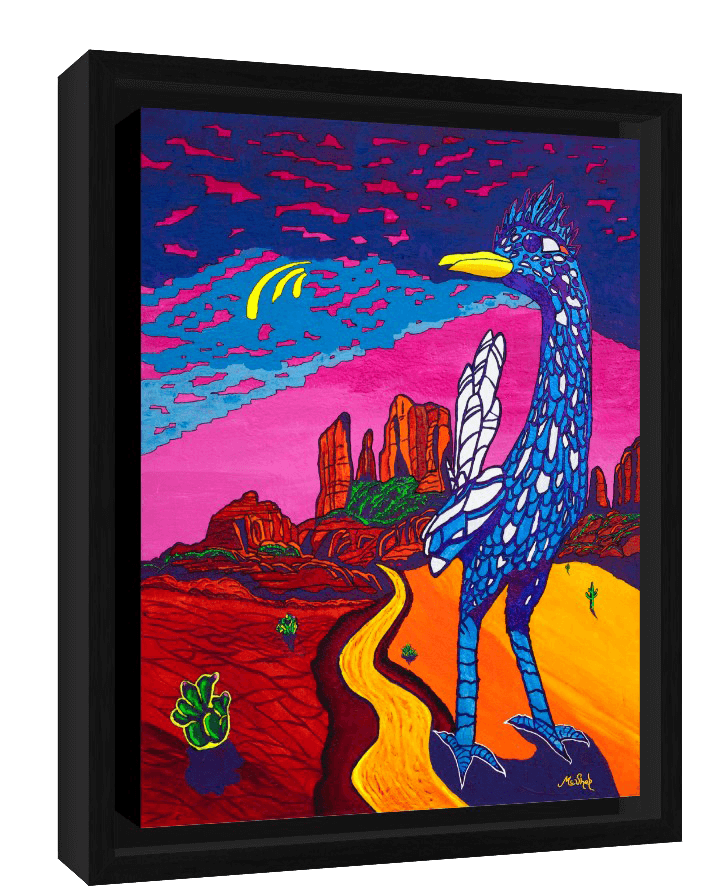
Luxurious Float-Frame

Gift Art Photo-Plaque
Giclée Art Print
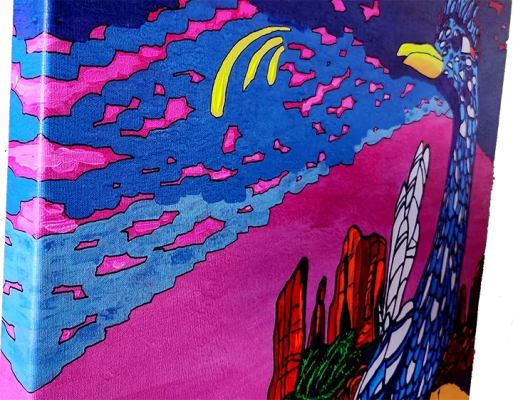
Limited Edition
Hand-Embellished Giclée
Sunbird: Before Sedona, Before Certainty
Before moving to Sedona, I believed I could earn a living selling my art at what were called tent shows. Boy, was I wrong! Promoters organized outdoor art events in cities across the Southwest, and I would load my work, set up a display, and hope to connect. One of those shows took place in Scottsdale, Arizona, during a time when everything still felt uncertain.
“Sunbird” belongs to that period—painted while I was still living in New Jersey, traveling whenever I could to the Southwest, and learning what it meant to be an emerging artist trying to find his footing. The painting was inspired by a visit my wife and I made to Old Town Albuquerque, where I photographed this adobe storefront that later became this watercolor artwork.
A Moment I Didn’t See Coming
During that Scottsdale tent show, I was standing about twenty feet from my display, talking with another artist. Suddenly, I heard a sharp yelp. I turned to see a woman carefully examining one of my paintings. She pointed and said, “That’s my shop.”
The painting she was holding was Sunbird. The woman was Sandra Hanks, whom I soon learned was the sister of Tom Hanks. She recognized the her storefront of “Sunbird”, immediately—it was her shop in Old Town Albuquerque.
Moments like that stay with you, not because of fame but because of validation. Something I had painted from memory and reference found its way back to the person who lived that place every day. As a watercolor artist followed by Sedona collectors today, I still think about how powerful that connection was at such an early stage.
Watercolor, Texture, and Discovery
“Sunbird” was created with watercolor techniques that kept the surface loose and lively. I emphasized warm adobe tones, weathered wood, and how desert light sinks into shadow. The hanging chile ristras, rough posts, and open doorway became visual anchors—simple elements that convey the spirit of place.
Back then, watercolor art felt more like discovery than control. I let washes flow freely, allowing the paper and pigment to work together. This approach laid the foundation for what later became my Sedona watercolor paintings, Sedona wall art, and Arizona art prints.
Surface, Texture, and Continuity
In creating “Sunbird,” I revisited a watercolor technique I had been developing — using kosher salt on wet pigment to form natural crystalline textures within the adobe surfaces. This method allowed the paint to break and bloom naturally, giving the walls a weathered, sun-worn look that felt authentic to the place rather than illustrative.
I used this same technique with “Sunbird,” in my earlier watercolor works like “Pitiado,” “Taos Pueblo,” and “Pueblo Mission,” where texture became a subtle storytelling element rather than just a visual effect. In “Sunbird,” the salt work adds gentle movement and depth, emphasizing that the Southwest reveals itself slowly—through layers, time, and restraint.
That ongoing process became a key part of my identity as an emerging artist and still influences how I approach Sedona watercolor paintings and desert landscapes today.
From Tent Shows to Sedona
Looking back, Sunbird is more than just a storefront—it symbolizes belief. Belief that art can connect strangers, travel across states, and come home in unexpected ways. That belief pushed me forward, eventually leading me to Sedona and a deeper dedication to my work.
Today, my Sedona artwork features Southwest wall art, desert landscape paintings, and mystical pieces inspired by those early lessons. While my materials and palette have changed, the essence of my work remains the same—honoring place, memory, and chance encounters.
Continuing the Journey
My artwork is featured at The Village Gallery, considered the top art gallery in Sedona. It’s an inspiring space where collectors can stand before my Sedona artwork, feel the energy of my watercolor paintings and Southwest art, and see how moments like Sunbird have helped shape the artist I continue to grow into.
The Heart of It All
Art lights up the same part of your brain as
falling in love—it’s an unforgettable feeling.
Collector’s Note
“Sunbird” is an early watercolor created while I was living in New Jersey, inspired by Old Town Albuquerque and a chance encounter at a Scottsdale tent show. It reflects a significant chapter in my journey as a Sedona artist and emerging artist.