
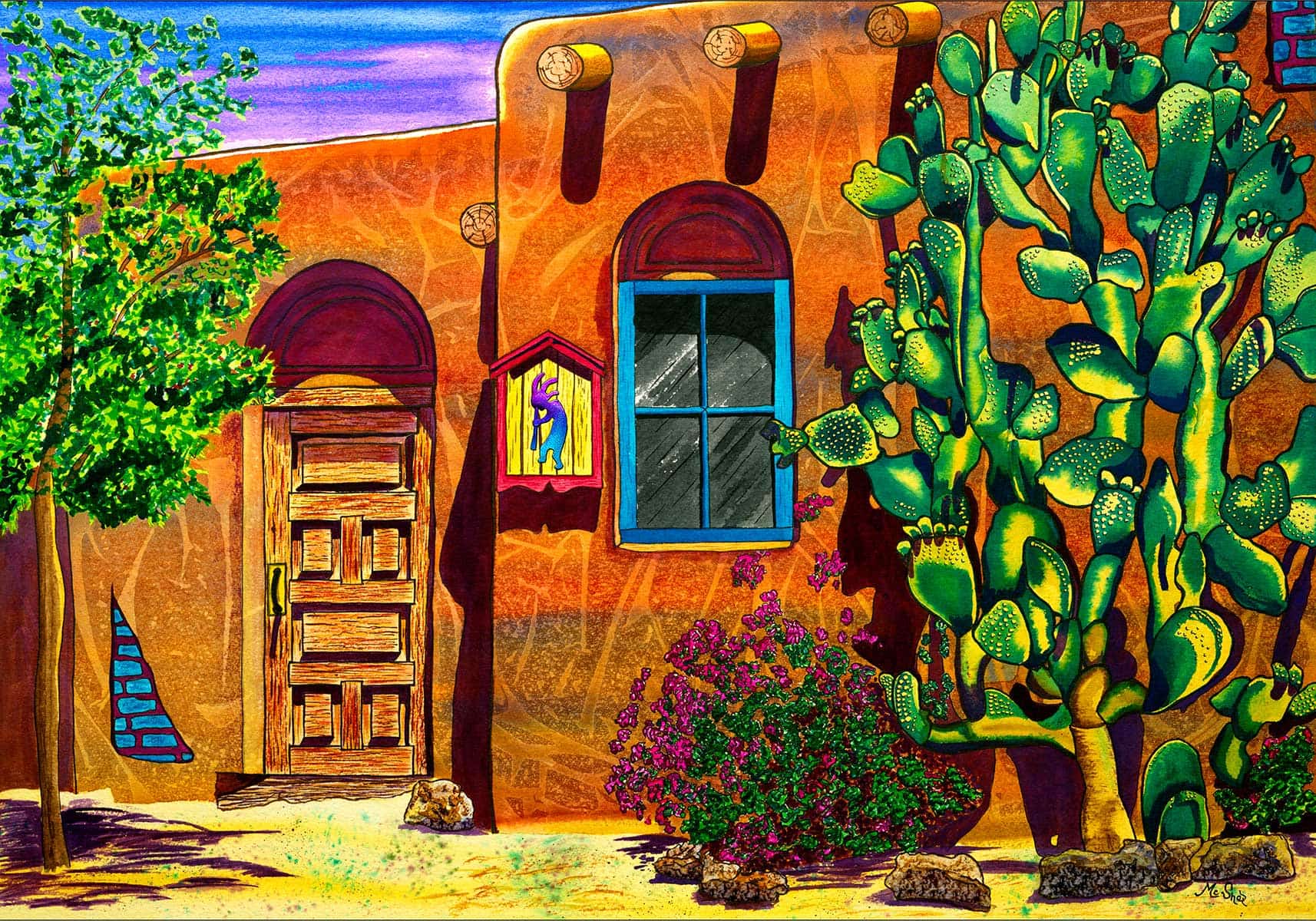
Pitiado — Discovering the Southwest Through Watercolor
Price range: $69 through $1,496

Pitiado is a Southwest watercolor I created during my years in New Jersey, inspired by early trips to Tucson, Arizona. Bold colors, experimental techniques, and symbolic details combine in this formative piece—capturing curiosity, discovery, and the moment my artistic voice started leaning toward the Southwest.
Choose Your Art Format

Luminous Metal Print

Canvas Gallery Wrap
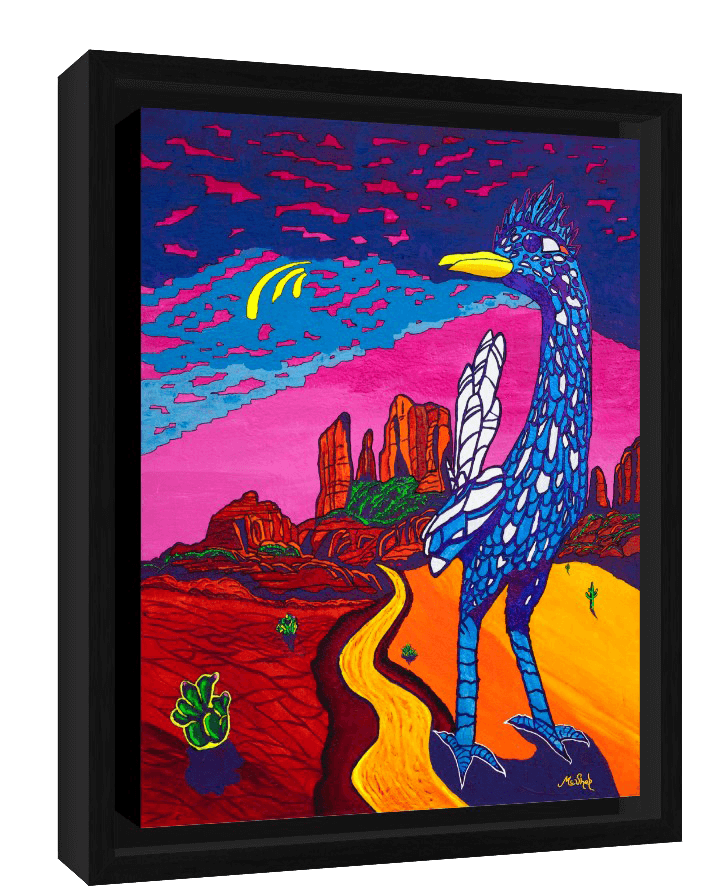
Luxury Float Frame

Gift Art Photo-Plaque
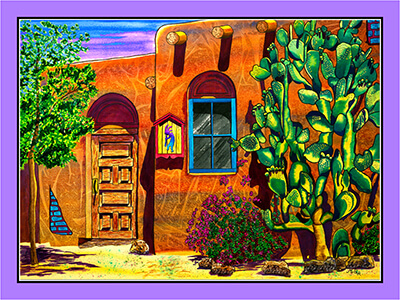
Giclée Art Print
Limited Edition
Hand-Embellished Giclée
The Story Behind the Painting
While still living in New Jersey, my wife and I traveled to the Southwest whenever possible, attracted to landscapes that seemed completely different from anything I knew. Tucson, Arizona, was one of those early destinations. The desert light, adobe textures, and cultural symbolism felt vibrant and alive, immediately resonating with me as a watercolor artist.
Pitiado grew from that sense of discovery. The painting was made from photographs I took during a visit to Old Tucson Movie Studios in 1993—a place full of cinematic history and visual storytelling. Years later, that same set was destroyed by fire, which made those reference moments feel even more meaningful in hindsight.
Looking at Pitiado today, I see it as part of the foundation that eventually inspired me to create Sedona watercolor paintings and Southwest wall art rooted in memory, place, and story.
Process, Experimentation, and Letting Go
Around this time, I attended a watercolor workshop with Skip Lawrence, who encouraged me to stop trying to control watercolor and instead explore what it wanted to do. That lesson became central to my process and is fully present in Pitiado.
I used frisket to preserve highlights, sprinkled kosher salt into wet washes to create crystalline blooms, pressed Saran Wrap into damp pigment to fracture texture, and even used a hairdryer to push paint across the paper—especially through the cactus forms. These techniques created an unpredictable surface full of movement and energy, qualities that still influence my Sedona watercolor paintings today.
In this lively world, I placed a Kokopelli, the desert flute player. To me, the Kokopelli symbolizes creativity, connection, and storytelling—linking experimental processes with Southwest artwork and mystical imagination.
Naming the Painting: A Community Moment
At the time, I was advertising on a Midwest radio station and looking for the perfect title. The host recommended turning it into a contest, offering a giclée print to the listener who submitted the best name.
The winning title was “Pitiado,” a word meaning “to embroider with thread made from the fiber of the century plant.” The host himself submitted it—and it stuck. That moment reaffirmed something I still believe as an emerging artist: art doesn’t exist in isolation. It connects people, places, and stories in unexpected ways.
A Formative Watercolor in Context
Pitiado is part of a series of watercolor paintings I made during my years in New Jersey, including works like Transient Sky and Tucson Periwinkle. They reflect my growing confidence with color, process, and Southwest themes—long before I ever thought about living and working as a Sedona artist.
These early watercolors laid the groundwork for Sedona wall art, Arizona art prints, and luminous landscapes that collectors know today.
Available Formats & Editions
Pitiado is offered as a watercolor artwork in the following formats:
• Original watercolor (when available)
• Giclée art prints
• Canvas gallery wrap giclées
• Luminous Metal prints
• Gift art photo plaques
Each format is carefully crafted to maintain the layered textures, vibrant color, and expressive spirit of the original watercolor.
The Heart of It All
Art lights up the same part of your brain as
falling in love—it’s an unforgettable feeling.
Collector’s Note
My work is also featured at the Village Gallery in Sedona—a Sedona art gallery devoted exclusively to hand-made artwork by local artists, and widely regarded as the true heart of Sedona’s local art scene. You can also find my work at Creative Gateways, a contemporary Sedona gallery that offers a welcoming mix of fine art and jewelry across a range of price points, as well as at Desert Valley Gallery in Las Vegas at Tivoli Village, where creativity, beauty, and craftsmanship come together in a unique and inspiring setting.
